

 November 6, 2026
 5 mins to read
For many years, when Nepali graduates thought about building a successful career, one destination came to mind: Kathmandu.
The capital has traditionally offered more companies, more industries, better networking opportunities, and a wider range of professional jobs. For many young people, moving to Kathmandu has simply been considered part of starting a career.
But things are changing.
Today, opportunities are slowly growing beyond the capital. New businesses are emerging in different cities, digital work is becoming more common, and remote and hybrid jobs are allowing professionals to work without always relocating.
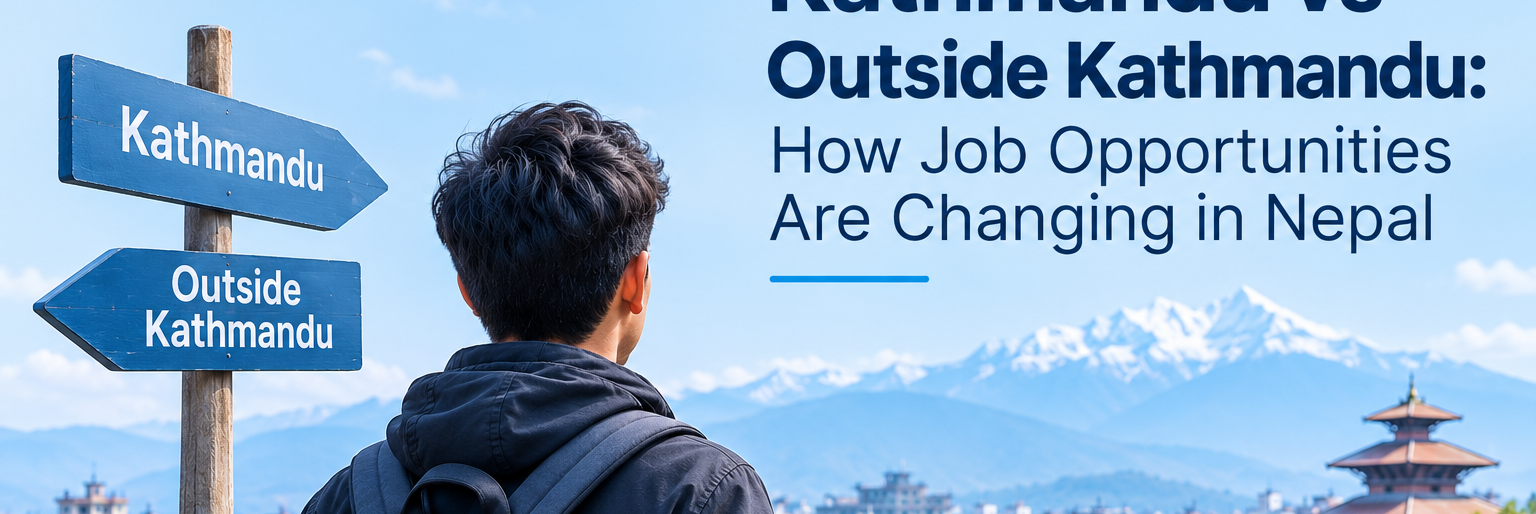
So, is Kathmandu still the best place for career growth? Or are opportunities outside the capital catching up?
Kathmandu: Nepal’s Biggest Job Market
Kathmandu remains the country’s largest employment hub. It brings together organizations from banking, IT, education, hospitality, consulting, development, media, e-commerce, and many other sectors.
For job seekers, this concentration of companies creates an important advantage: more choices.
A professional can explore different companies, attend career events, build a network, and change jobs without necessarily changing cities.
However, Kathmandu also comes with challenges.
Competition for good positions can be intense, particularly for fresh graduates. At the same time, rent, transportation, food, and other living expenses can make it expensive to live in the capital.
So, having more jobs does not always mean having a better career experience.
Opportunities Outside Kathmandu Are Growing
Nepal’s career landscape is no longer limited to Kathmandu.
Cities such as Pokhara, Bharatpur, Biratnagar, Butwal, Hetauda, Nepalgunj, and Itahari are developing their own business and employment ecosystems.
Tourism, banking, education, healthcare, manufacturing, agriculture, construction, hospitality, sales, and digital businesses are creating employment opportunities in different parts of the country.
For some professionals, working outside Kathmandu can offer advantages such as lower living costs, less competition, and a stronger connection with local businesses and communities.
The opportunities may be different from those available in Kathmandu, but different does not necessarily mean less valuable.
Remote Work Is Changing the Game
One of the biggest changes in the employment market is the growth of remote and hybrid work.
In the past, working for a Kathmandu based company often meant living in Kathmandu.
Today, that is not always the case.
Professionals working in IT, digital marketing, graphic design, content creation, customer support, consulting, finance, and other digital roles may be able to work from their hometown while serving companies based elsewhere.
This creates a new possibility for Nepali professionals:
You don’t always have to move to where the job is. Sometimes, the job can come to where you are.
Of course, remote work cannot replace location based jobs in industries such as hospitality, healthcare, manufacturing, construction, and retail. But it is certainly changing how we think about employment.
The Real Gap Is Often Access, Not Talent
At Reach HR Solutions, we believe one important point should not be overlooked:
Talent exists everywhere in Nepal.
A talented graduate outside Kathmandu may have the same skills and ambition as someone in the capital. The difference may simply be access to information, professional networks, training, internships, and employers.
This is why connecting the right candidate with the right opportunity matters.
Recruitment should not only be about finding candidates who are nearby. It should be about finding people with the right skills, attitude, and potential.
What Should Job Seekers Do?
If you’re a fresh graduate or professional considering whether to move to Kathmandu, don’t make the decision based on location alone.
Ask yourself:
- What skills do I want to develop?
- Which industries offer opportunities in my preferred location?
- Will this job help me grow professionally?
- Can I find remote or hybrid opportunities?
- What are the actual living costs compared with the salary?
- Can I build a career where I currently live?
Sometimes moving to Kathmandu is the right decision. Sometimes staying in your hometown is smarter.
The best choice depends on your career goals, skills, industry, and personal situation.
What Does This Mean for Employers?
The changing job market also gives employers an opportunity to think beyond Kathmandu.
Companies can increasingly access talent from different parts of Nepal through remote and hybrid work arrangements.
Instead of focusing only on where a candidate lives, employers can focus on what the candidate can bring to the organization.
This can help businesses reach a wider talent pool and discover capable professionals who may otherwise be overlooked.
The Future of Jobs in Nepal
Kathmandu will continue to play a major role in Nepal’s employment market. Its large corporate ecosystem and professional network make it an important destination for career development.
But it may no longer be the only destination.
As businesses grow in other cities and technology makes remote work easier, Nepal’s employment opportunities are becoming more distributed.
For job seekers, this means more choices.
For employers, it means access to more talent.
And for Nepal, it could mean something even more valuable: people may not always have to leave their hometown to build a meaningful career.
A Final Thought from Reach HR Solutions
A successful career doesn’t have to follow one path.
For some, that path may lead to Kathmandu. For others, it may lead to Pokhara, Biratnagar, Bharatpur, Butwal, or even a home office in their own hometown.
What matters most is not simply where you work, but whether the opportunity helps you learn, grow, and move forward.
At Reach HR Solutions, we believe the future of employment should connect talent with opportunity regardless of where that talent lives.
Because talent is everywhere. The right opportunity should be too.
Leave a Comment