

 June 11, 2026
  4 mins to read
 Not long ago, where people worked was a simple question with a simple answer: the office. Then the world changed. Work became remote overnight, hybrid models emerged, and organizations were forced to rethink not just where work happens but how talent is attracted, engaged, and retained.
As we move through 2026, one thing is clear: there is no one size fits all hiring model anymore. Employers are making more intentional choices between remote, hybrid, and on-site work, and those choices are directly shaping their ability to attract the right talent.
So, what are employers choosing in 2026 and what does it mean for hiring success?
The shift from policy to strategy
In earlier years, work models were often reactive decisions driven by necessity. Today, they are strategic hiring tools.
Organizations are asking deeper questions:
- What kind of talent do we want to attract?
- How important is flexibility to our workforce?
- Which roles truly require physical presence?
The answers are shaping hiring models across industries.
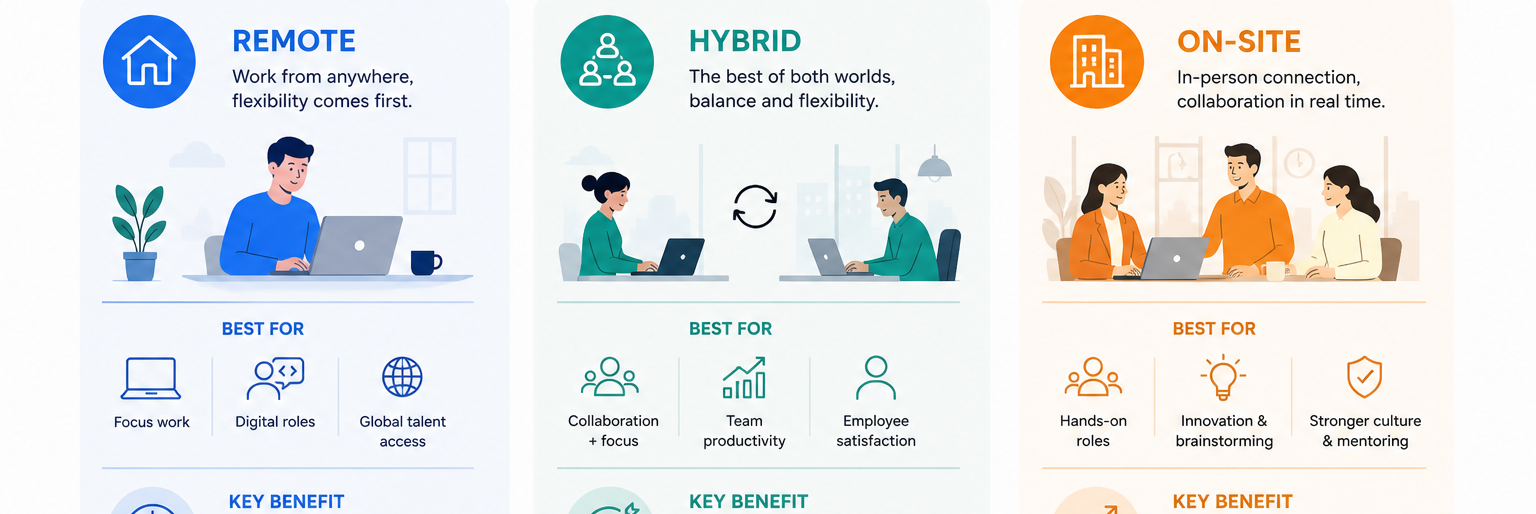
Remote work: Access without borders
Remote hiring is no longer a trend it is a competitive advantage.
In 2026, companies that continue to offer remote roles are benefiting from:
- Wider talent pools beyond geographic boundaries
- Increased access to specialized and niche skills
- Higher appeal among younger professionals and global talent
However, remote hiring also demands maturity. Employers must invest in:
- Strong communication systems
- Outcome based performance management
- Intentional culture-building
Organizations that treat remote work as “work from anywhere” rather than “work from nowhere” are the ones succeeding.
Impact on talent attraction: Remote roles consistently attract higher application volumes, especially from high-skilled professionals who prioritize autonomy and flexibility.
Hybrid work: The new middle ground
For many employers in 2026, hybrid work has become the default choice.
Why? Because it balances structure with flexibility.
Hybrid models allow organizations to:
- Maintain team collaboration and in person connection
- Support flexibility without losing cultural alignment
- Offer employees choice without sacrificing accountability
Candidates increasingly see hybrid work as a sign of a progressive and people centric employer.
However, hybrid hiring requires clarity. Employers that succeed are very clear about:
- Which days are in office and why
- How performance is measured
- How inclusion is ensured for both in office and remote employees
Impact on talent attraction: Hybrid roles appeal strongly to mid-level professionals and leaders who value both flexibility and collaboration.
On-Site work: Purpose driven presence
While some predicted the end of on-site work, 2026 tells a different story.
On-site hiring remains essential for:
- Manufacturing and operations
- Customer facing roles
- Hands on technical and service positions
What has changed is expectation.
Candidates are now asking:
- Why does this role require on-site presence?
- What value does the workplace add to my growth?
Employers who succeed with on-site hiring focus on:
- Strong workplace culture
- Learning and development opportunities
- Clear career progression
Impact on talent attraction: On-site roles attract best when they offer meaning, stability, and visible growth not just attendance.
What candidates really want in 2026
Across all work models, one message from candidates is consistent:
Flexibility is no longer a benefit, it is a signal of trust.
Talent in 2026 prioritizes:
- Flexibility and autonomy
- Growth and skill development
- Emotional intelligence in leadership
- Transparent communication
The work model itself matters but how it is implemented matters even more.
Choosing the right model: A hiring advantage
Forward thinking employers are no longer asking, “Which model is best?”
They are asking:
- Which model aligns with our culture?
- Which model helps us attract and retain the right people?
- Which roles truly benefit from flexibility or presence?
Organizations that align their hiring strategy with business reality and human needs are winning the talent race.
The role of HR in the new hiring reality
HR leaders in 2026 are not just filling roles, they are architects of the employee experience.
This means:
- Designing flexible hiring frameworks
- Educating leaders on managing distributed teams
- Creating inclusive policies across work models
At Reach HR Solutions, we work closely with organizations to design hiring strategies that reflect both market realities and human expectations.
Final thoughts
Remote, hybrid, or on-site the question is no longer about trends. It’s about intentional choices.
The organizations that attract the best talent in 2026 are those that:
- Respect how people work best
- Communicate clearly and lead with empathy
- Align flexibility with accountability
The future of hiring isn’t about location. It’s about connection, trust, and purpose.
Leave a Comment